
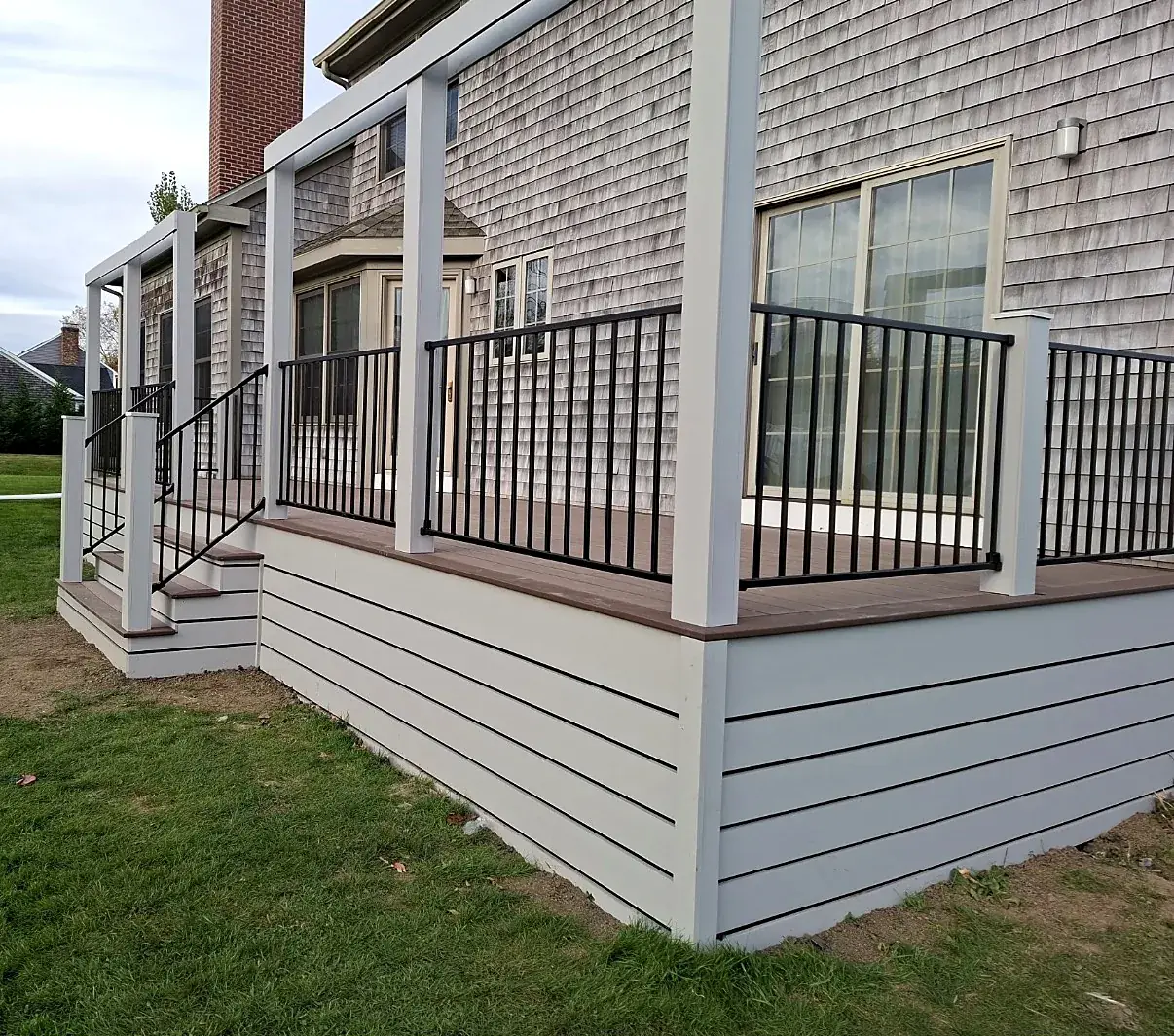
A deck is one of the few home improvements you use every week for half the year, and one buyers notice the moment they walk into the yard. Here is what it adds, and what separates a deck that holds its value from one that needs replacing in ten years.
Living space without an addition
A 300 square foot deck adds a dining room and a sitting area for a fraction of what enclosed construction costs. In Newport County, where lots are often tight and the season is short, a deck that opens off the kitchen gets used far more than a patio at the far end of the yard. We see it on every project: the closer the deck is to the fridge, the more dinners happen outside.
Resale
National cost-versus-value surveys have ranked decks among the exterior projects that return the largest share of their cost at resale for years. The figure moves around and varies by region, so we will not quote one here. The pattern does not move: buyers pay for finished outdoor space, and a good photo of a deck carries a listing.
What makes one last
Coastal Rhode Island is hard on exterior wood. Salt air, wind and freeze-thaw cycles find weak fasteners and a ledger that was never flashed. The decks we see still solid after twenty years have a few things in common.
- A ledger that was flashed properly and footings sized for the soil, not the lumber yard’s minimum.
- Stainless or hot-dip galvanized hardware. Plain zinc-plated screws rust out near the water within a few seasons.
- Decking chosen for how much upkeep the owner will actually do. Pressure-treated and cedar need sealing every couple of years. Composite needs a wash.
- Railings and stairs built to code, which also makes them comfortable to use.
Wood or composite
Wood costs less to build and looks the way most Newport-area homeowners want a porch to look. It also needs sealing or staining every few years, and most people stop doing it after the second time. Composite costs more up front, needs very little care and holds its color. Both are good choices when the framing underneath is done right, which is where the real durability lives.
Timing
Design, permitting and material lead times take weeks. Homeowners who want to use a new deck by Memorial Day usually start the conversation in January or February. If a deck is on your list, send the project form and pick a time for a call with the owner.